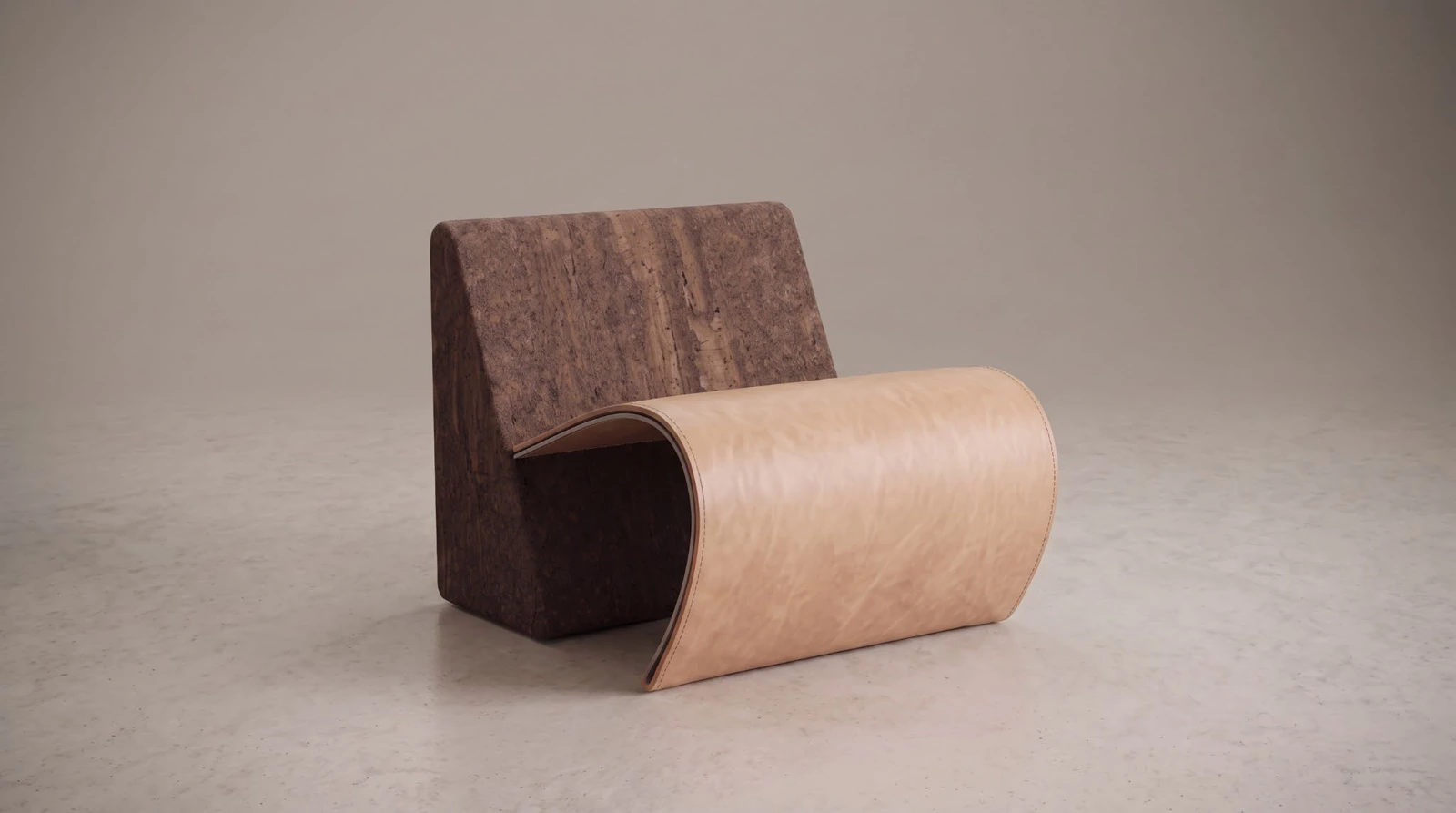
Lounge chair · Cork and saddle leather
HOU CHAIR
A Seat for
a Quieter Life
Designed by
Hsieh-jen Lee
Thick yet not heavy.
Thin yet not light.
Hou draws on Eastern philosophy to explore the balance between apparent opposites. Thickness holds a calm presence without visual heaviness. Thinness retains substance and strength.
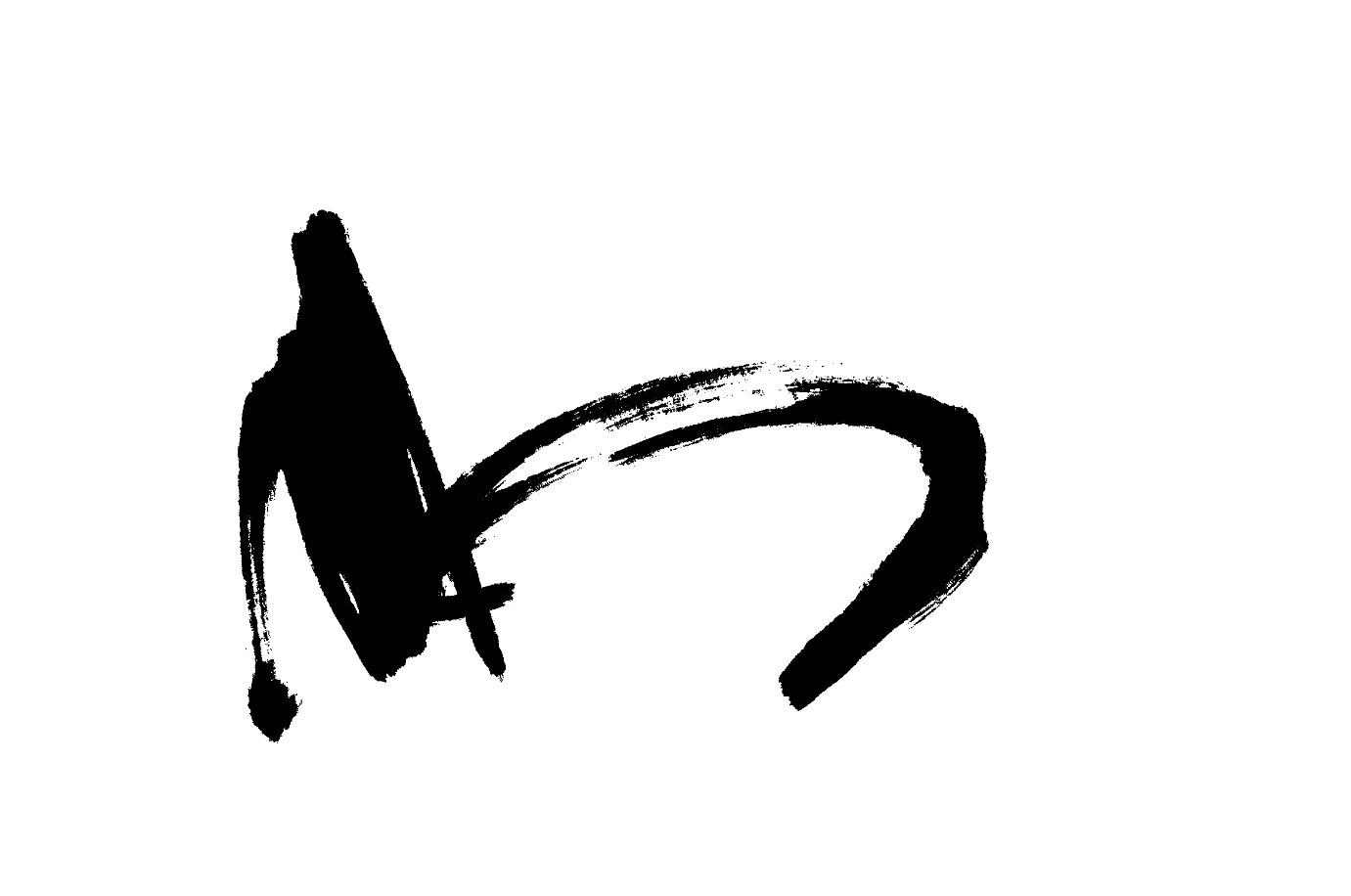
Balance through the coexistence of opposing qualities
The sketch brings these ideas together: a dense upright stroke meets a sweeping curve, while the open space between them holds the composition in balance.
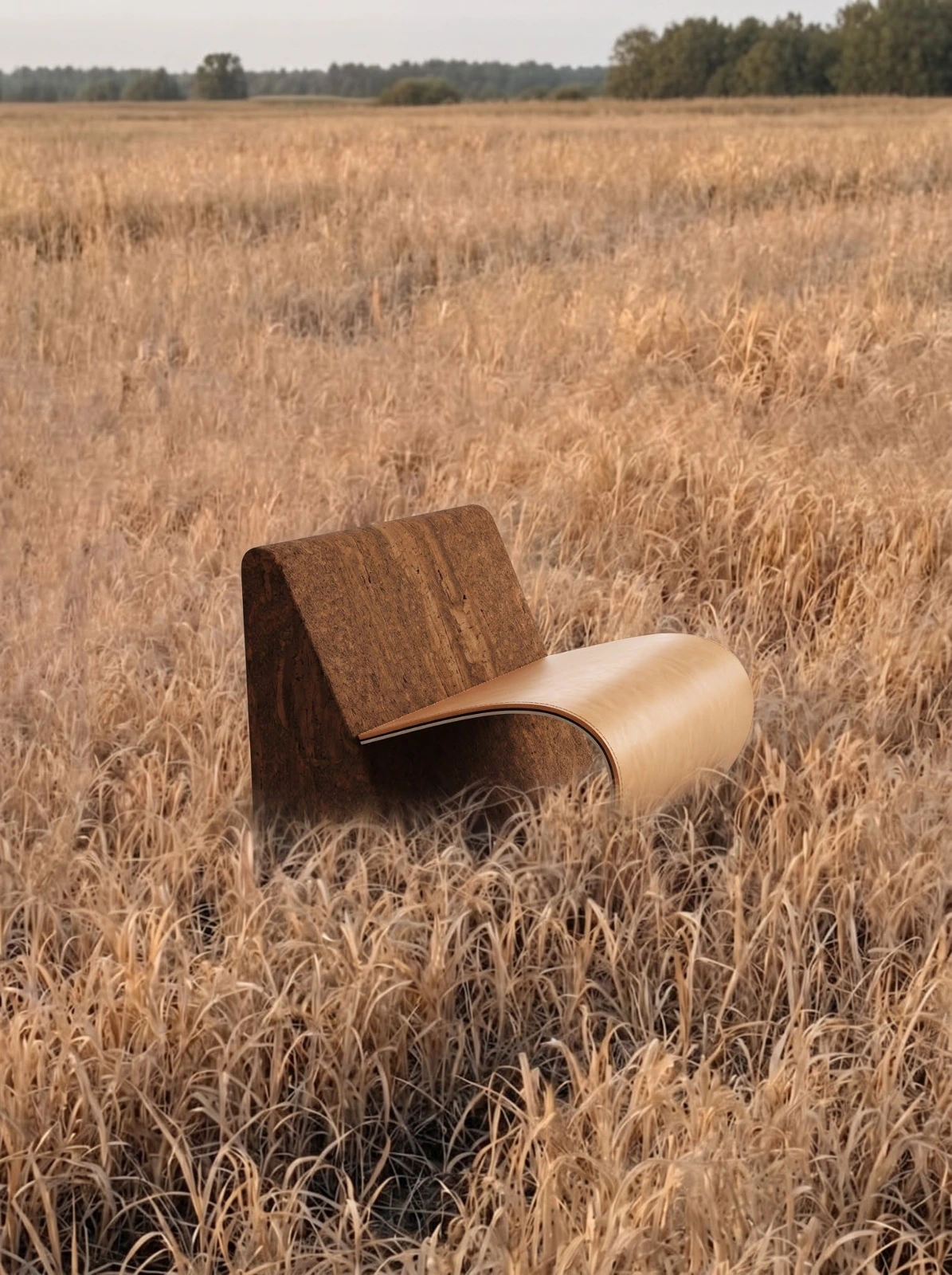
Design intent
A grounded presence
An Eastern understanding of balance expressed through thickness and thinness, weight and lightness.
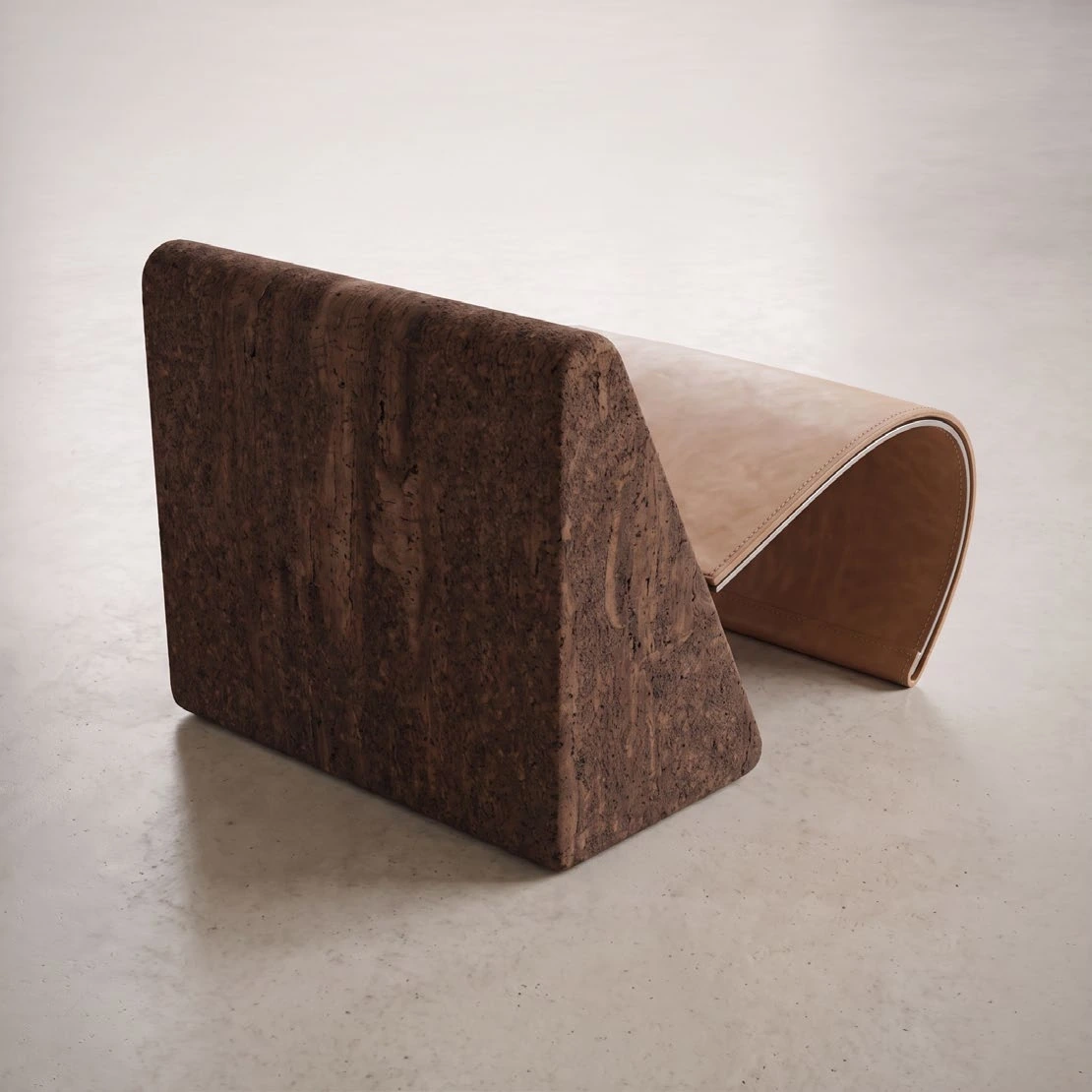
The substantial cork body gives Hou its visual weight. A thin leather curve opens the form and brings the seat into contact with the body.
The space between these materials is part of the design. It allows mass and lightness to coexist within one continuous profile.
A thin edge around
an open volume
A solid rear volume and a continuous front curve define the chair from different viewpoints. The seat extends forward and turns downward in one broad curve. Behind it, the cork body forms a backrest and a grounded base. The opening between them keeps the profile visually light.
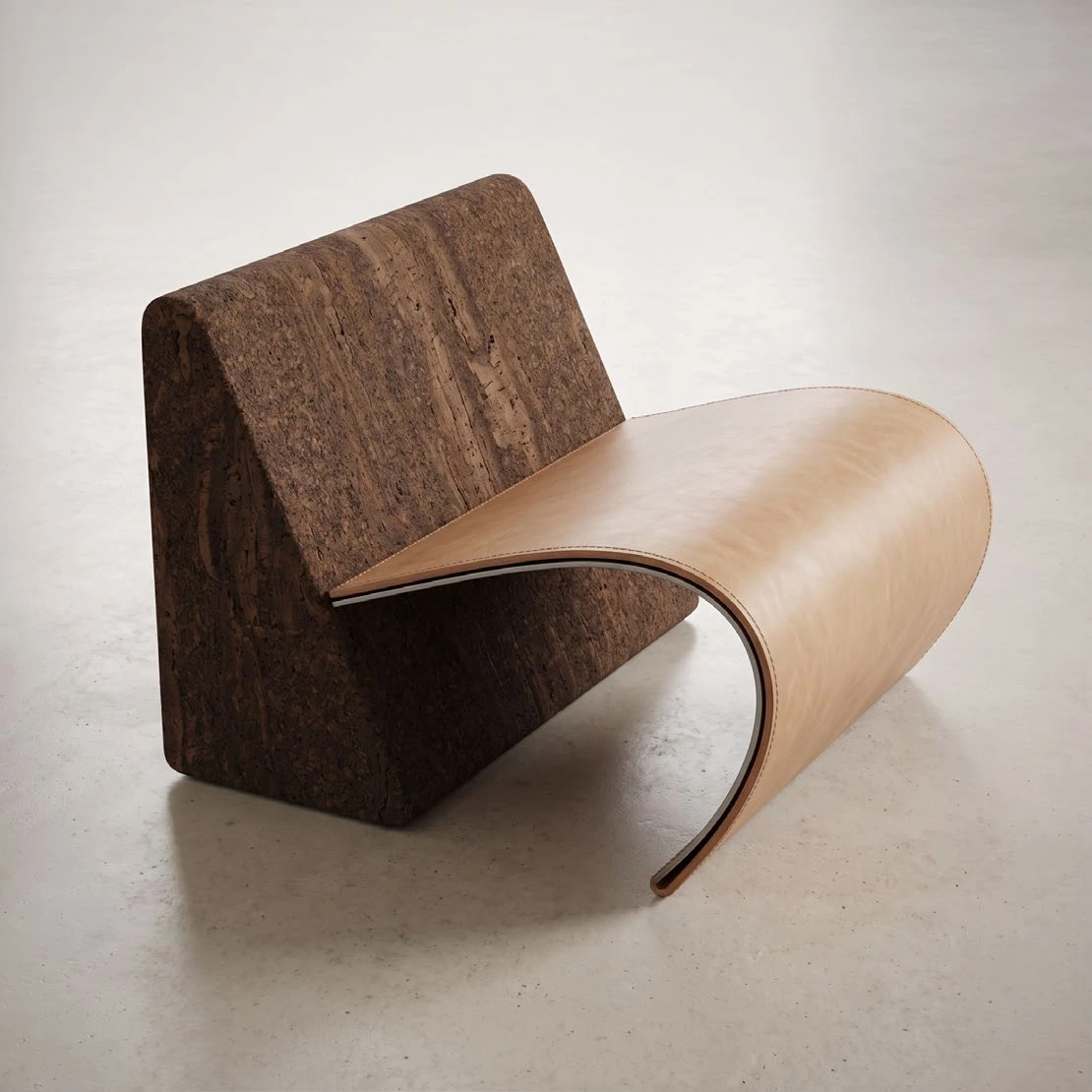
Explore Hou
in 3D.
Turn the chair to explore its profile, material surfaces and layered seat.
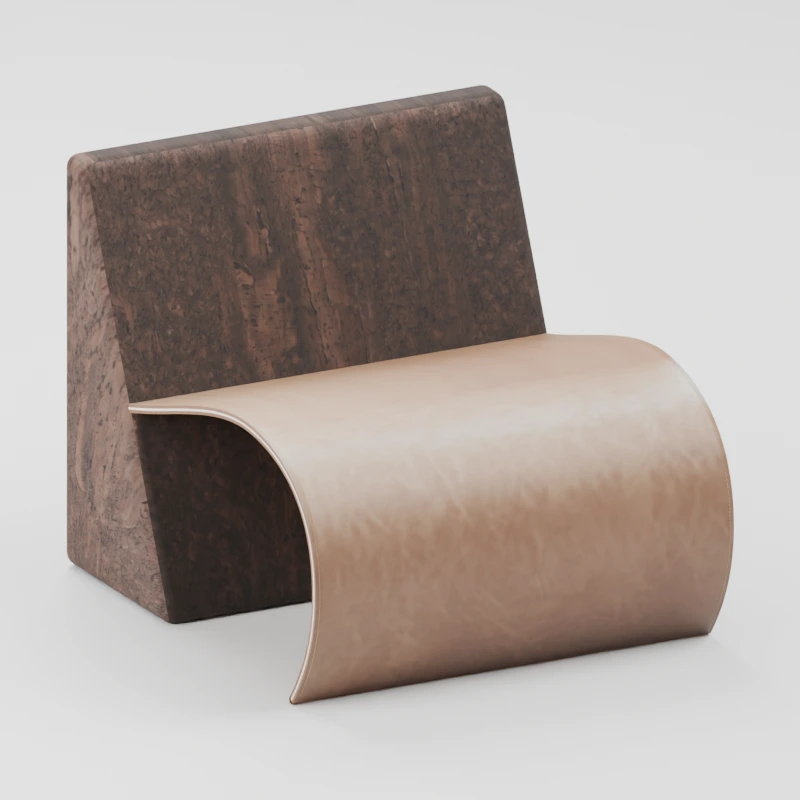
Select Explore 3D model to begin.
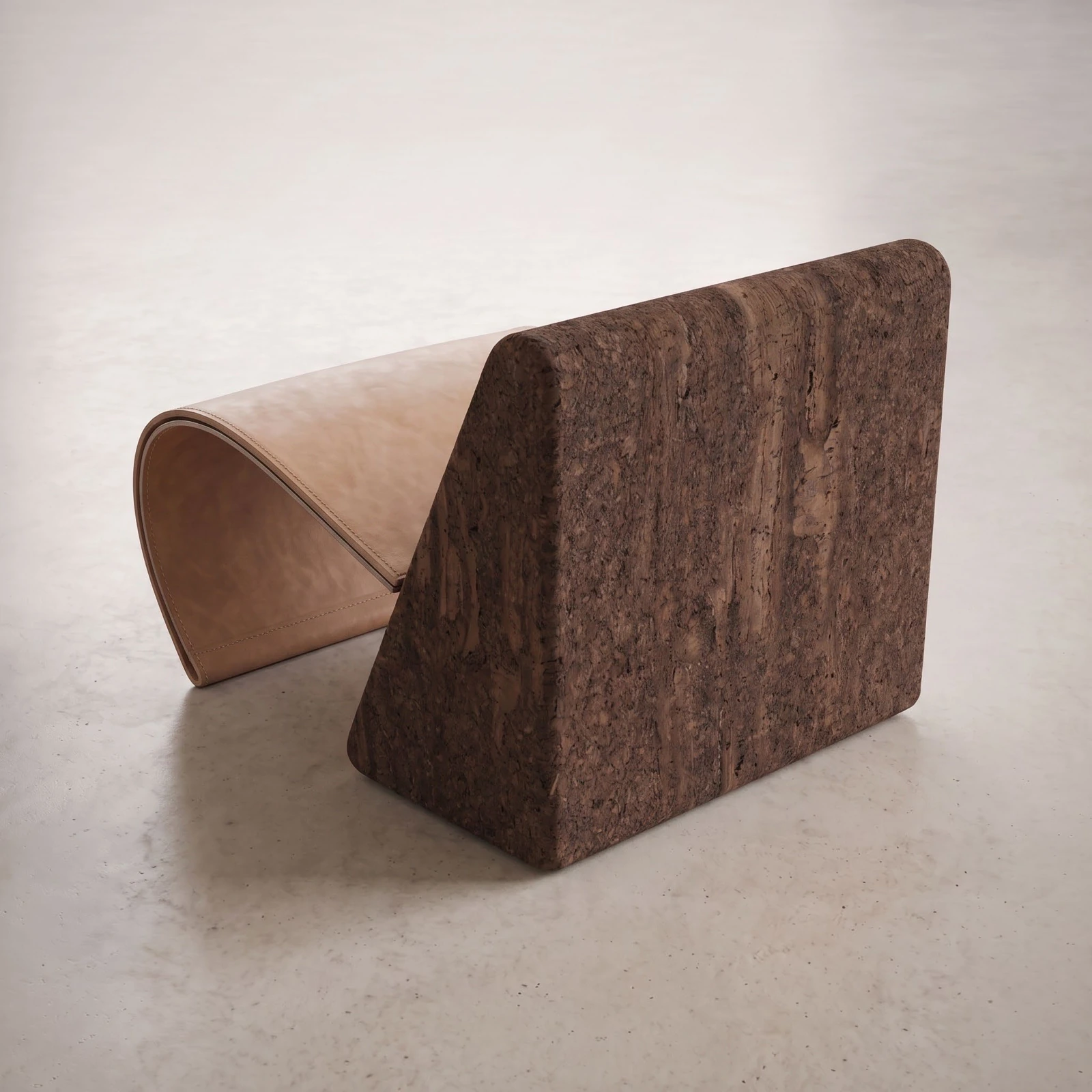
Cork.
Saddle leather.
Cork establishes the volume. Saddle leather defines the surface closest to the body.
Cork
The textured body gives the chair a substantial, grounded character.
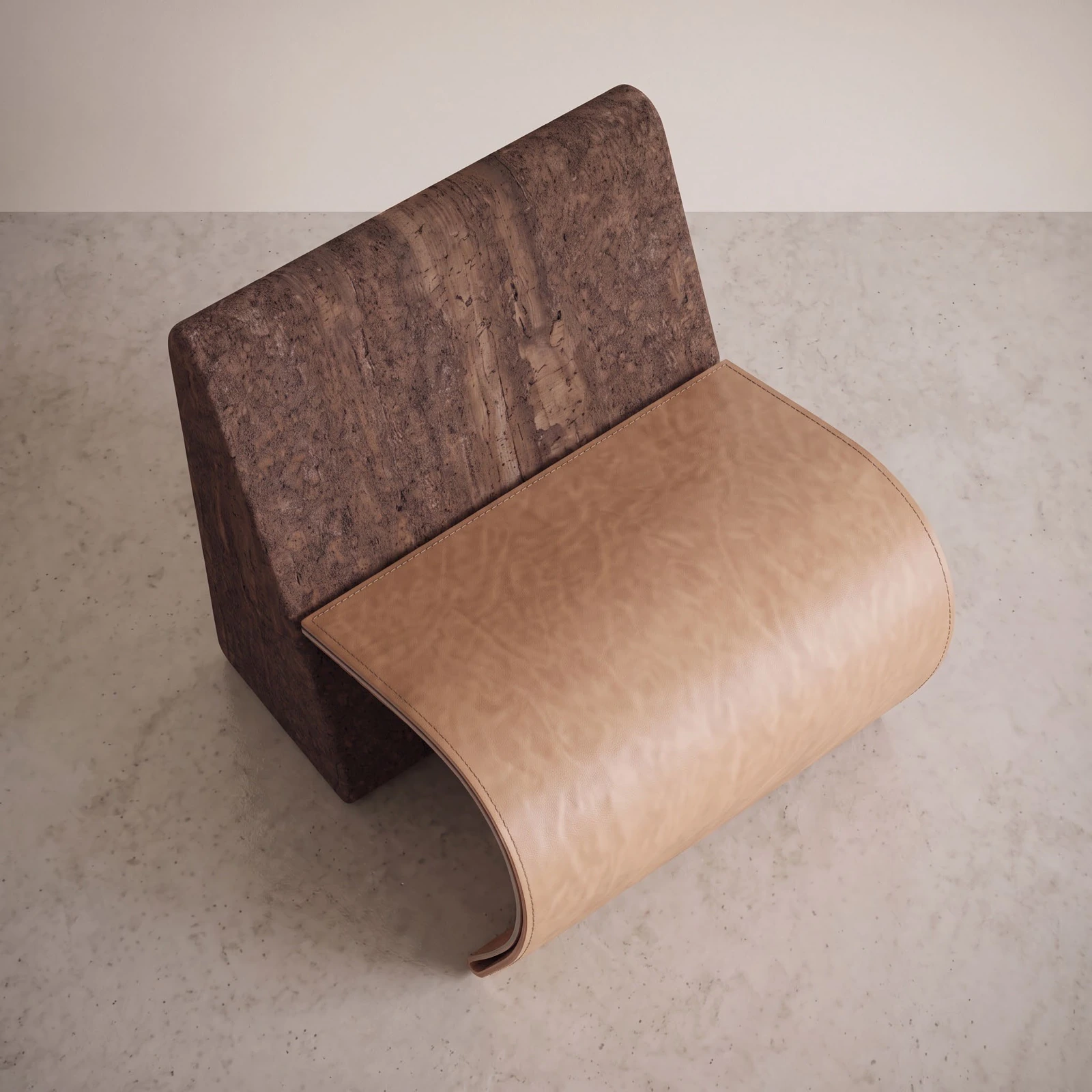
Saddle leather
The warm, continuous surface emphasizes curvature and a thin visible edge.
A continuous
contact surface
An open seat intended for sitting, pausing and resting.
The curved saddle-leather seat is conceived to follow the body and offer a subtle sense of enclosure. The design relies on its fixed form and material response to support a quiet sitting experience.
A renewable beginning.
A renewable material, considered use and the ambition to last.
-
Renewable by nature
Cork is harvested from bark without felling the tree. The bark regenerates between harvests. Hou places this renewable resource at the centre of its material concept.
-
Use material with purpose
The thin, self-supporting core aims to provide support with less bulk. Material use and strength will be balanced through prototype testing.
-
Design for a longer life
A lasting form and a careable leather surface guide the design. Responsible sourcing, repair options and end-of-life separation remain development goals.
Design intentions; environmental performance is not yet quantified. Cork reference: Corticeira Amorim, “Curiosities”.
A compact sculptural form
with a quiet visual character.
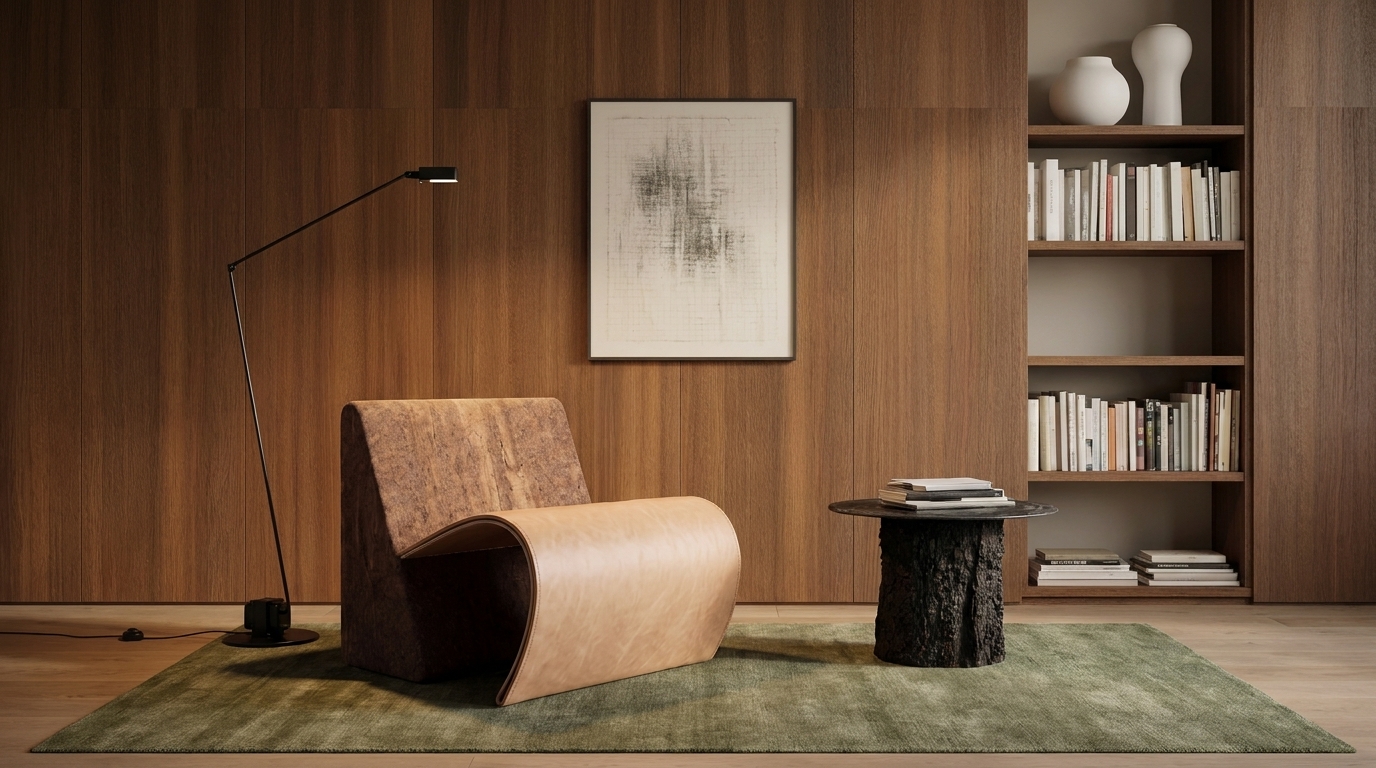
Hou Chair
Hou explores balance through material contrast, a continuous seat curve and an open interior volume.
Lounge chair
Designed by Hsieh-jen Lee
Taipei, Taiwan
- Width
- 750 mm
- Depth
- 850 mm
- Height
- 680 mm
- Maximum seat height
- 420 mm
DevelopmentJanuary–August 2026
Materials and construction
Cork body with a saddle-leather seat surface.
Proposed concealed continuous composite core.